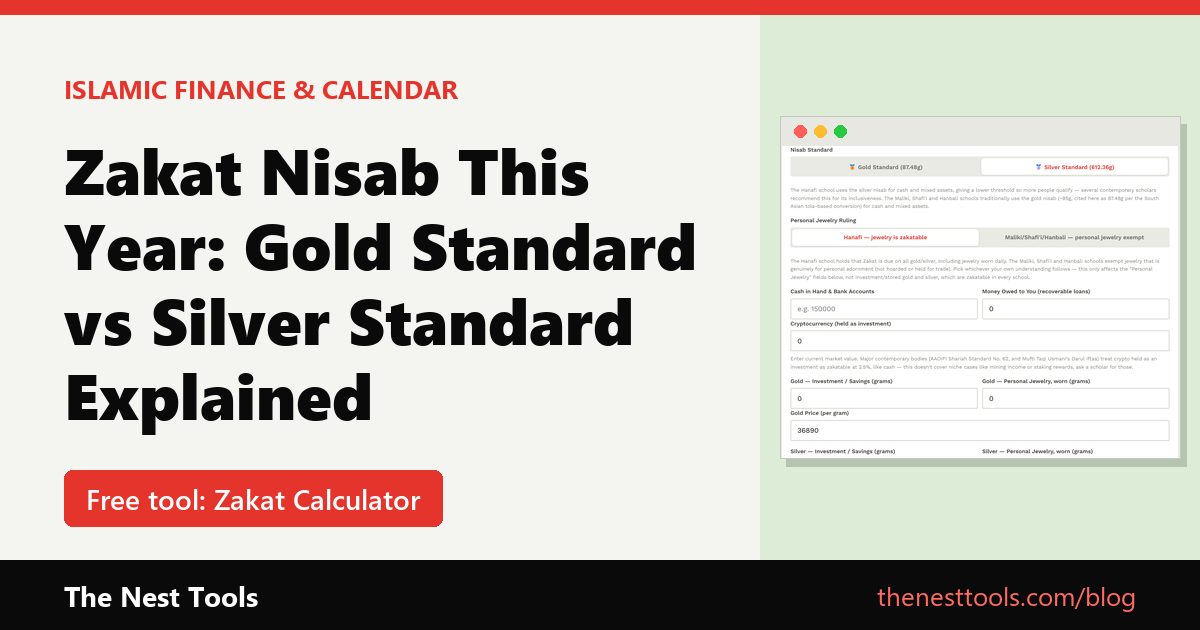
Before Zakat becomes obligatory on your wealth, that wealth has to clear a minimum threshold called Nisab. The tricky part is that there are two different, both legitimate, standards for calculating it, gold and silver, and they can produce noticeably different thresholds. Here’s what each one means and how to think about the choice.
What Nisab Actually Is
Nisab is the minimum amount of qualifying wealth a Muslim must have before Zakat becomes due. If your wealth, held for one full lunar (Hijri) year, is at or above the Nisab threshold, Zakat is owed at a rate of 2.5% of that qualifying wealth. Below the threshold, Zakat isn’t obligatory on that wealth.
The Two Nisab Standards
Nisab has traditionally been defined two ways:
- Gold standard: the value of 87.48 grams of gold
- Silver standard: the value of 612.36 grams of silver
Because gold and silver prices move independently and don’t track each other exactly, these two standards rarely produce the same rupee, dollar, or other local-currency threshold at any given moment. Silver is typically worth far less per gram than gold, so the silver-based Nisab threshold is usually significantly lower in monetary terms than the gold-based one.
Which Standard Should You Use?
This is a genuine, longstanding point of scholarly difference, not a case of one standard being correct and the other being a mistake. Many scholars recommend the silver standard specifically because it results in a lower threshold, meaning more people become eligible to pay, which is considered more favorable to the poor who receive Zakat. Other scholars and schools of thought apply the gold standard instead. Both positions are grounded in classical Islamic jurisprudence, and reasonable, qualified scholars differ on which one applies to a given situation.
If you’re unsure which standard applies to you, asking a local scholar familiar with your specific school of thought and circumstances is the right move, rather than assuming one standard is universally correct.
Why the Exact Gram Figures Themselves Sometimes Vary
Even the 87.48g gold figure isn’t universally cited identically everywhere, some sources round to approximately 85 grams instead. This small variance traces back to differing conversions of the classical unit of measurement, the mithqal, into modern grams, not a disagreement about the underlying religious ruling. Treat small variations in the gram figure as a units-conversion nuance rather than a substantive disagreement.
Working Out Your Own Nisab Value
Because gold and silver prices fluctuate daily, the actual Nisab value in your local currency has to be recalculated using current market rates, not a fixed number carried over from a previous year. Our Zakat Calculator presents both the gold and silver standards side by side, rather than picking one for you, and calculates your Zakat liability across cash, gold, silver, business assets, and other qualifying wealth categories, including guidance for newer questions like cryptocurrency holdings.
Frequently Asked Questions
How much gold before Zakat is due?
Under the gold Nisab standard, the threshold is the value of 87.48 grams of gold (sometimes cited as approximately 85 grams, depending on the mithqal-to-gram conversion used). If your qualifying wealth held for one lunar year meets or exceeds that value, Zakat is due at 2.5%.
What’s the difference between the gold and silver Nisab standards?
Gold Nisab is based on 87.48 grams of gold; silver Nisab is based on 612.36 grams of silver. Because silver is worth much less per gram, the silver-based threshold in local currency is usually significantly lower than the gold-based one, meaning more people qualify to pay Zakat under the silver standard.
Which Nisab standard is correct, gold or silver?
Both are legitimate, scholarly-supported standards, this is a genuine point of difference in Islamic jurisprudence rather than one option being a mistake. Many scholars favor silver because it produces a lower, more inclusive threshold; others apply the gold standard. Ask a knowledgeable local scholar if you’re unsure which applies to your situation.
Does Nisab change every year?
The gram thresholds themselves (87.48g gold, 612.36g silver) don’t change, but the actual monetary value of that Nisab does change constantly, since it’s tied to current gold and silver market prices, which fluctuate daily.
See both Nisab standards calculated against current values, and your full Zakat liability, with the Zakat Calculator.
[…] Nisab standard: gold (about 85–87.48 g) or silver (about 595–612.36 g). The silver standard is lower, so more people owe zakat under it. See gold standard vs silver standard. […]