Zakat is one of the Five Pillars of Islam — an obligatory act of charity for Muslims whose wealth exceeds a minimum threshold known as Nisab. While the concept is simple, actually calculating the correct amount can feel confusing, especially when your wealth is spread across cash, gold, silver, and other assets. Here’s a practical breakdown.
The Basic Zakat Rate
Zakat is calculated at a rate of 2.5% of qualifying wealth that has been held for one full lunar (Hijri) year and exceeds the Nisab threshold.
What Is Nisab?
Nisab is the minimum amount of wealth a person must have before Zakat becomes obligatory. It’s traditionally defined using two standards:
- Gold standard: the value of 87.48 grams of gold
- Silver standard: the value of 612.36 grams of silver
Because gold and silver prices fluctuate daily, the actual Nisab value in your local currency changes over time — it needs to be recalculated using current market rates, not a fixed number from a previous year.
Which Standard Should You Use?
Many scholars recommend the silver standard, since it results in a lower threshold and is considered more favorable to the poor (more people become eligible to give, and the obligation kicks in at a lower wealth level). Others use the gold standard. If you’re unsure which applies to your situation, it’s worth asking a local scholar, since practice can vary.
What Counts Toward Zakat
Generally, Zakat applies to wealth that is “growing” or held for potential growth, including:
- Cash and bank savings
- Gold and silver (jewelry rules can vary by school of thought)
- Business inventory and trade goods
- Investments and shares held for trading
It generally doesn’t apply to your primary residence, personal-use items, or vehicles you use rather than trade.
A Simple Example
If your total qualifying wealth (cash + gold value + silver value, etc.) is $10,000 and it exceeds the current Nisab threshold, your Zakat due is:
$10,000 × 2.5% = $250
Calculate Yours Automatically
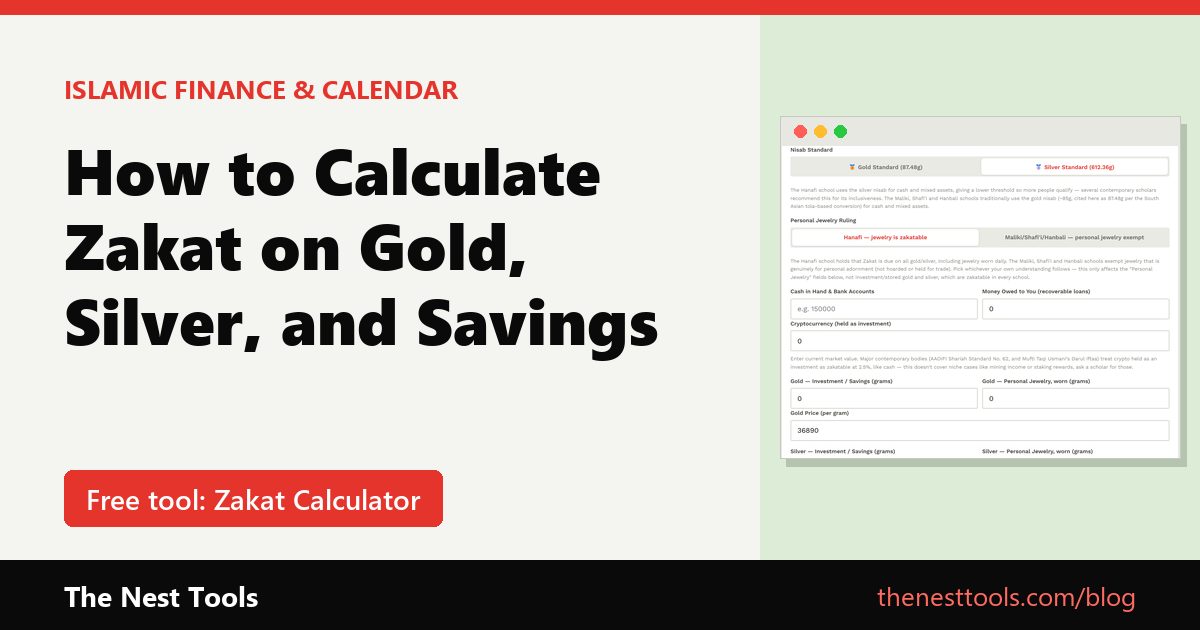
Since Nisab depends on live gold and silver rates, doing this by hand means tracking current prices yourself. The Nest Tools’ Zakat Calculator lets you enter your cash, gold, and silver holdings and calculates your Zakat due against both the gold and silver Nisab standards.
Frequently Asked Questions
Do I pay Zakat on money I owe to others, or that others owe me?
Generally, debts you owe can be deducted from your zakatable wealth, and money owed to you that you expect to be repaid is usually included. Specifics can vary by school of thought, so check with a knowledgeable source for your situation.
Is Zakat calculated on the lunar year or the regular calendar year?
Traditionally on the Islamic (Hijri) lunar year, which is about 10–11 days shorter than the Gregorian year.
What if my wealth fluctuates above and below Nisab during the year?
Common practice is to check your wealth at the start and end of your Zakat year; if you’re above Nisab at the point your Zakat is due, it’s generally payable on your full qualifying wealth at that time.
[…] How to Calculate Zakat on Gold, Silver, and Savings […]