“Net 30” on an invoice means the full amount is due 30 days after the invoice date. “Net 7” and “Net 15” work the same way with 7 and 15 days, and “Due on receipt” means pay now. An invoice dated 1 March on Net 30 is due on 31 March. Whatever term you choose, write the actual due date on the invoice too, so there’s no argument about when payment is late.
Below: what the common terms mean, a due-date table, which terms suit freelancers and small businesses, and how to set them on an invoice.
Common Invoice Payment Terms
| Term | Meaning |
|---|---|
| Due on receipt | Payment is due as soon as the client receives the invoice |
| Net 7 | Due 7 days after the invoice date |
| Net 15 | Due 15 days after the invoice date |
| Net 30 | Due 30 days after the invoice date |
| Net 60 | Due 60 days after the invoice date |
| EOM | Due at the end of the month the invoice is issued in |
| 2/10 Net 30 | 2% discount if paid within 10 days; otherwise the full amount is due in 30 days |
| 50% upfront | Half before work starts, the rest on completion |
“Net” means the net amount, the total after any discounts. The days are calendar days counted from the invoice date, not the date the work finished or the date the client opened the email, unless you state otherwise.
Due Date Examples
| Invoice date | Net 7 | Net 15 | Net 30 | Net 60 |
|---|---|---|---|---|
| 1 March | 8 March | 16 March | 31 March | 30 April |
| 15 June | 22 June | 30 June | 15 July | 14 August |
| 10 November | 17 November | 25 November | 10 December | 9 January |
Months have different lengths, so Net 30 isn’t always “the same date next month”: 1 March plus 30 days is 31 March, not 1 April. If you want business days instead of calendar days, say so explicitly; the business days calculator can add working days to a date.
Which Terms Should Freelancers Use?
- New clients and small jobs: Due on receipt, Net 7 or a deposit up front. Shorter terms reduce the risk of chasing a client you don’t know yet.
- Regular clients: Net 14 or Net 15 is a common middle ground, professional without a long wait.
- Larger companies: many have accounts-payable processes built around Net 30 or longer. Agree the term before you start work, not when you invoice.
- Long projects: split the fee into milestones, with an invoice at each stage, so you’re never owed months of work at once.
Remember that a client paying on the last day, plus bank transfer time, means Net 30 can easily become five or six weeks before the money arrives. Plan your cash flow around that.
How to Put Payment Terms on an Invoice
- Choose the term, for example Net 15.
- Work out the due date from the invoice date.
- Show both clearly near the total: “Payment terms: Net 15. Due: 16 March.”
- Include how to pay: bank details or a payment link.
- If you charge late fees, state them in your contract and on the invoice, within what local law allows.
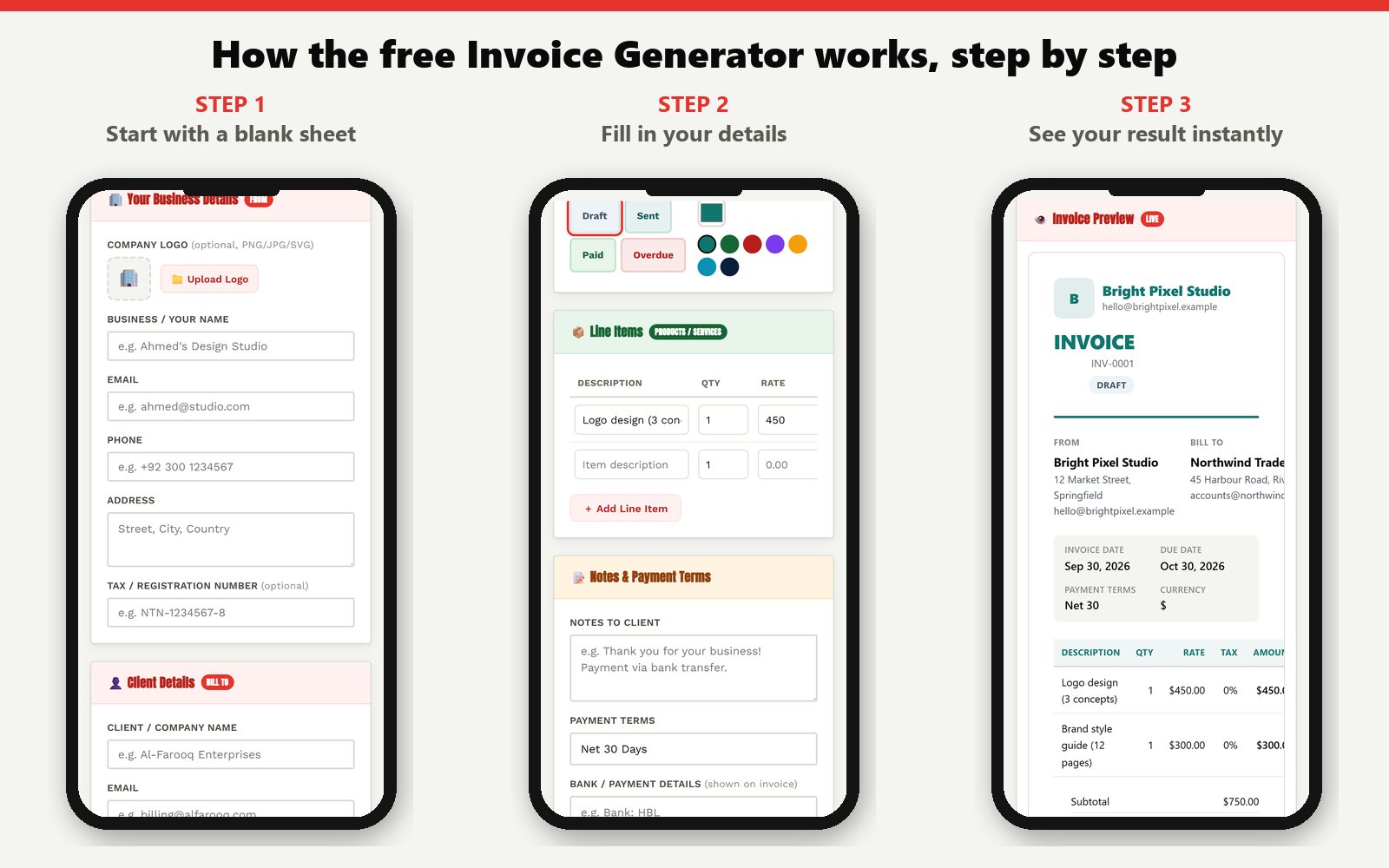
In the free invoice generator, pick the term from the Payment Terms list (Due on Receipt, Net 7, Net 15, Net 30, Net 60 or Custom) and set the matching due date in the Due Date field; the invoice shows both.
Frequently Asked Questions
What does Net 30 mean on an invoice?
The full invoice amount is due within 30 calendar days of the invoice date. An invoice dated 1 March on Net 30 is due on 31 March. It doesn’t mean 30 days from when the client reads it, unless your terms say so.
Is Net 30 counted in business days or calendar days?
Calendar days, unless the invoice or contract says otherwise. Weekends and holidays are included in the 30 days. If you mean business days, write “30 business days” explicitly.
What does “due on receipt” mean?
Payment is due as soon as the client receives the invoice. In practice, many clients still take a few days, so if you need a hard date, write one, for example “Due on receipt, by 5 March”.
What does 2/10 Net 30 mean?
The client can take a 2% discount if they pay within 10 days; otherwise the full amount is due within 30 days. On a 1,000 invoice, paying by day 10 costs 980. It encourages early payment at the cost of a small discount.
Create an invoice with clear terms and a due date in the free invoice generator, and read quote vs invoice vs receipt for what each document should include.