“Compound interest” gets mentioned constantly in personal finance, but the actual mechanics — why it grows the way it does, and why starting early matters so much — are often glossed over. Here’s how it actually works.
Simple Interest vs. Compound Interest
Simple interest is calculated only on the original principal, every period. Compound interest is calculated on the principal plus any interest already earned, so your interest starts earning its own interest.
The Compound Interest Formula
A = P (1 + r/n)nt
- A = the final amount
- P = the principal (starting amount)
- r = annual interest rate (as a decimal)
- n = number of times interest compounds per year
- t = number of years
A Worked Example
$1,000 invested at 8% annual interest, compounded annually, for 20 years:
A = 1,000 × (1 + 0.08)20 ≈ $4,661
Compare that to simple interest over the same period: $1,000 + (1,000 × 0.08 × 20) = $2,600. The difference — over $2,000 — comes entirely from interest earning interest on itself.
Why Time Matters More Than the Rate
Because growth compounds, the number of years invested tends to matter more than small differences in the interest rate. Money given more time to compound benefits disproportionately, which is why starting earlier — even with smaller amounts — is often emphasized over waiting to invest a larger sum later.
Compounding Frequency
More frequent compounding (monthly vs. annually, for example) produces a slightly higher final amount at the same stated annual rate, because interest starts earning interest sooner within each year.
Try the Calculation Yourself
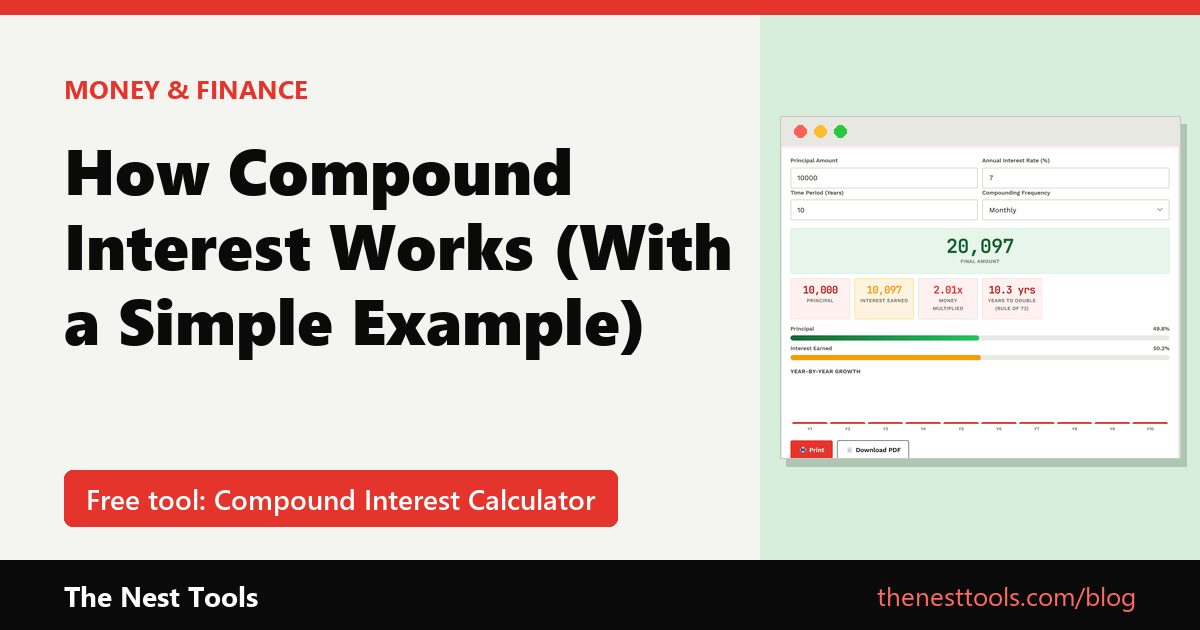
The Nest Tools’ Compound Interest Calculator lets you enter your principal, rate, time period, and compounding frequency, and see the year-by-year growth instantly.
This example assumes a single lump-sum investment. If you are contributing a fixed amount every month instead, our SIP Calculator models that recurring-contribution scenario instead.
Frequently Asked Questions
Does compound interest apply to debt too, not just savings?
Yes — credit card debt and some loans also compound, which is why unpaid balances can grow faster than expected.
Is a higher compounding frequency always significantly better?
It helps, but the difference between, say, monthly and daily compounding at the same rate is usually small compared to the effect of the rate itself or the time invested.